
Nearly twenty minutes from Mpwapwa town, past long dusty roads that rise and fall between dry hills, sits Lupeta village. From far away, it looks passive with small mud houses, fields of maize, goats, and skinny cows moving slowly in the heat.
But behind that quiet picture is a daily struggle. Families in Lupeta wake before sunrise. They farm, they fetch water, they work until their hands are rough and tired. Even after all that work, money is never enough. Sugar is a luxury, soap is counted carefully, and for many girls, sanitary pads are something they only hear about, not something they can afford.
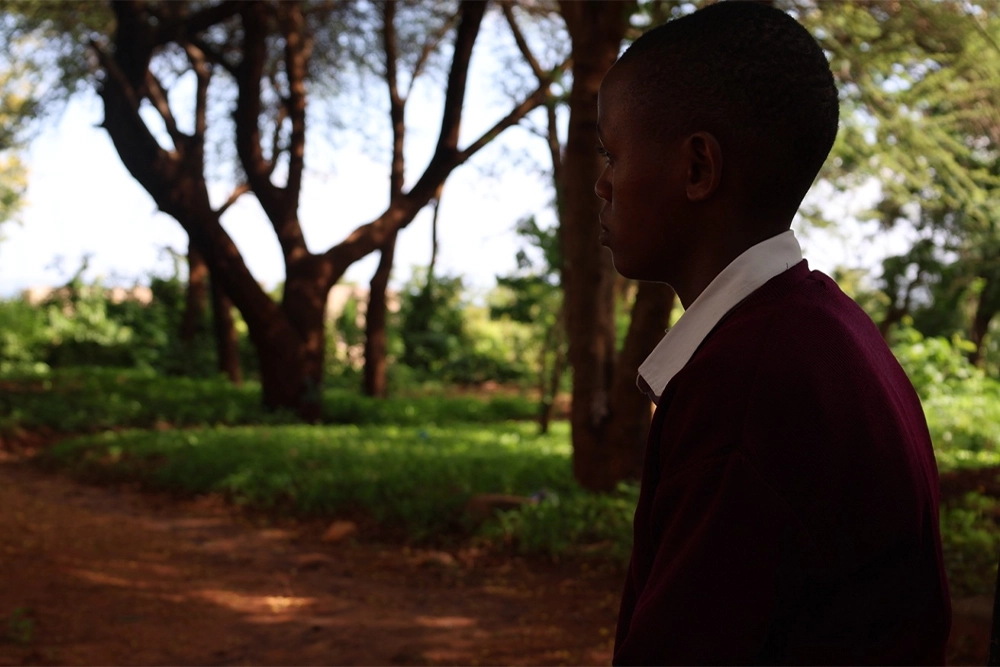
For sixteen-year-old Siwema*, a student at Kimaghai Secondary School, this is not just a small problem. It has shaped her life. Siwema lives with her elderly father, whose battle with alcohol has made their home uncertain and fragile. Some nights there is food, some nights there is not. Some evenings are quiet, others are filled with tension and silence that feels heavy in the air.
Every school day, Siwema walks a long distance through the mountains. The road is lonely. Sometimes wild animals cross her path. She walks with fear, but she keeps going, knowing education is her only hope. When she reaches home in the afternoon, she often looks for something to eat before opening her books. Hunger makes it hard to concentrate. Still, she tries.
Then every month, another challenge comes, one she did not choose. When her period begins, everything changes. There are no sanitary pads in her home, no extra money, and no one to ask for help. So, she tears pieces from old cloth and folds them carefully, hoping they will last through the day. They rarely do.
She sits in class feeling discomfort and fear. She worries constantly about staining her uniform. She imagines whispers behind her back. She fears a teacher might call her to the front of the class. She fears the boys might laugh.
“Since I first started my menstrual cycle, those days are the days I hate the most in my life. I am so uncomfortable; I do not even want to go to school because I am scared that if my clothes get dirty, I will be laughed at. Most times I prefer to stay home, because using torn pieces of cloth instead of sanitary pads makes me feel not well covered.”
The fear becomes too much. So, for several days every month, during her period, she stays home and locks herself inside. She misses lessons and falls behind, not because she is lazy or she does not care, but because she does not have what she needs to manage it safely.
Her story is painful. But it is not rare. Across villages like Lupeta, many girls face the same silent struggle. They miss school, they lose confidence, and some eventually drop out completely. A lack of something so small becomes a wall that blocks their future.
For Siwema, change began when she joined the Children’s Dignity Forum school club. For the first time, she sat in a room where girls spoke openly about their bodies without shame. She learned what menstruation really is. She learned that there is nothing dirty or wrong about her. She learned she deserves dignity.
She also received sanitary pads. It sounds simple. Just pads. But for Siwema, it meant freedom. Now, when her period comes, she still walks the mountain road. She still sits in class. She raises her hand. She joins discussions. She laughs with her friends. She no longer counts the days in fear.
Her school attendance has improved, and her confidence has grown. The girl who once hid inside her house now speaks boldly about her dream of becoming a gynecologist. She wants to help other girls understand their bodies. She wants to make sure no girl feels the shame she once carried alone.
Siwema is proof of something powerful: sometimes the biggest barriers in a girl’s life are not her ability or her ambition but the lack of simple, practical support. A packet of sanitary pads cannot solve poverty. It cannot fix broken homes. It cannot erase hunger. But it can keep a girl in school. It can protect her dignity. It can protect her future.